

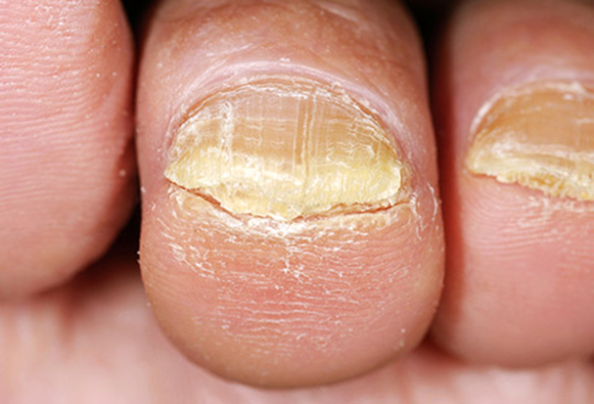
If you’ve noticed your toenails turning yellow, white, or brown, or becoming thicker and harder to trim, you’re not alone. It’s one of the most common concerns we see at Frenchs Forest Foot Clinic. While these changes are often harmless, they can also be a sign of an underlying issue that’s worth having checked.
Here’s what’s usually behind it.
1. Fungal Nail Infection (Onychomycosis)
By far the most common cause, nail fungus thrives in warm, moist environments such as sweaty shoes, shared showers, swimming pools, and gym change rooms.
Early signs include:
- Yellow, white, or brownish discolouration
- Nails becoming thickened or brittle
- A crumbly texture or the nail lifting away from the skin
- A mild odour in more advanced cases
Fungal infections tend to develop slowly over months and can spread to other nails or the surrounding skin (such as tinea) if left untreated.
2. Nail Trauma
Repeated pressure from tight or ill-fitting shoes, running, or even a stubbed toe can damage the nail bed.
This often presents as:
- A dark red, purple, or black nail (bruising under the nail)
- Thickening over time as the nail grows back irregularly
- Ridges or a distorted nail shape
Trauma-related changes can look very similar to fungal infections, which is why a proper assessment is important. Treating the wrong cause won’t resolve the problem.
3. Underlying Skin Conditions
Conditions such as psoriasis or eczema can affect both the skin and the nails, leading to pitting, thickening, and discolouration. If you have a history of these conditions, be sure to mention it to your podiatrist.
4. Circulation and Age-Related Changes
As we age, nail growth naturally slows and nails often become thicker and more brittle due to reduced circulation and years of minor trauma.
While this is common, it should still be monitored, particularly if you have diabetes or peripheral vascular disease, as poor circulation can slow healing if an infection develops.
5. General Health Conditions
Less commonly, changes in nail colour or texture may be linked to health conditions such as diabetes, thyroid disorders, or nutritional deficiencies.
For this reason, it’s best not to simply cover the nail with polish and ignore the changes.
Why It’s Worth Getting Checked
Fungal infections, trauma, and other nail conditions can look almost identical, but each requires a different treatment approach. Using over-the-counter products for the wrong condition can waste months and allow the real problem to worsen.
At Frenchs Forest Foot Clinic, we can:
- Accurately diagnose the cause of nail colour changes and thickening
- Take a nail sample for fungal testing if required
- Safely reduce thickened nails to relieve pressure and discomfort
- Recommend and monitor the most appropriate treatment, whether topical, oral, or laser therapy
- Provide footwear and hygiene advice to help prevent recurrence
When to Book an Appointment
See a podiatrist sooner rather than later if you notice:
- Nail changes that are spreading or becoming worse
- Pain, swelling, or discharge around the nail
- You have diabetes or a condition affecting your circulation or immune system
Thickened, discoloured nails rarely resolve on their own, and the earlier they’re assessed, the easier they are to treat.
If you’ve noticed changes in your nails, book an appointment with the team at Frenchs Forest Foot Clinic. We’ll identify the underlying cause and recommend the most effective treatment to help restore your nail health.